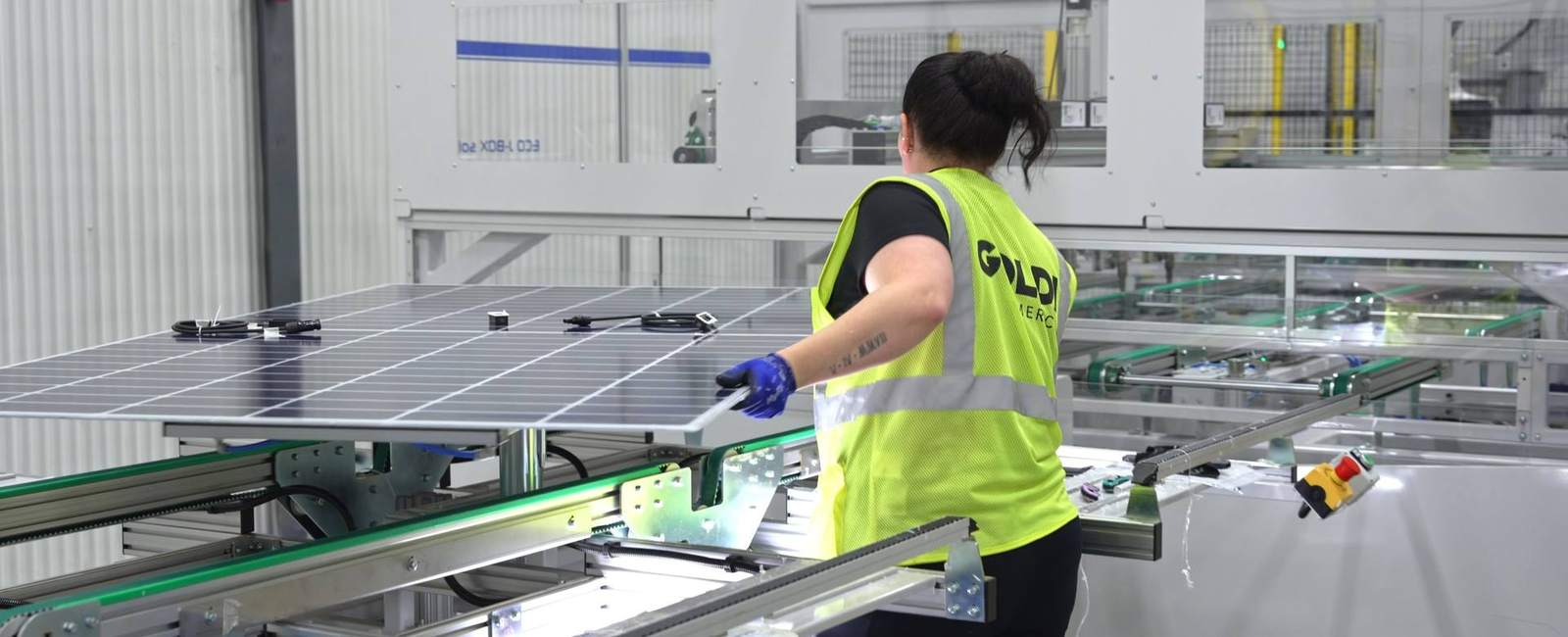
The solar block of a clean-power portfolio
Google, which aims to run on 24/7 carbon-free energy on every grid where it operates by 2030, has said a cost-optimal clean portfolio combines variable renewables, clean firm generation and flexible balancing resources, including energy storage. Solarix supplies one part of that: the modules for the solar portion.
Our line is sized to supply specific projects, or to serve as a domestic second source alongside larger suppliers.
Power purchase agreements
Utility-scale projects built by a developer under contract to the operator.
Co-located generation
Solar built on or next to the campus.
On-site arrays
Ground-mount and elevated arrays on land the operator controls.
What data center energy teams ask suppliers for
Sourcing records
Domestic content data under Notice 2025-08 and foreign-entity certifications under Notice 2026-15, with chain-of-custody records.
Environmental product declaration
In July 2024, the iMasons Climate Accord governing body called on data center suppliers to adopt third-party-verified environmental product declarations.
EPEAT registration
To be listed on the EPEAT Registry, solar modules must show embodied carbon at or below 630 kg CO₂e/kWp, including the frame. At or below 400 earns EPEAT Climate+.
Supply terms
Annual volume, delivery schedule and allocation, agreed in writing.
Solarix does not claim lower embodied carbon until a third-party EPD or EPEAT registration is published.
Rear-side gain on open, reflective sites
Ground-mount and tracker arrays collect reflected light on the rear of a bifacial module. In Kiwa PVEL's 2026 Scorecard, HJT modules showed higher median bifaciality and a smaller (less negative) temperature coefficient than TOPCon and PERC.
The load
Compute is becoming a grid-scale load.
U.S. data centers used 192 TWh, 4.7% of the nation’s electricity, in 2024. Lawrence Berkeley National Laboratory’s 2025 Update puts 2030 at 11.8% in its reference case, within a 9.5% to 15.3% range.
Utility-scale solar supplied nearly half of new U.S. generating capacity in 2025, by LBNL’s count.
Solar Technology Outlook 2030U.S. data center electricity use
Request supply for a data center project
Share the location, capacity and timeline. Project sales will reply with supply options and documents.